
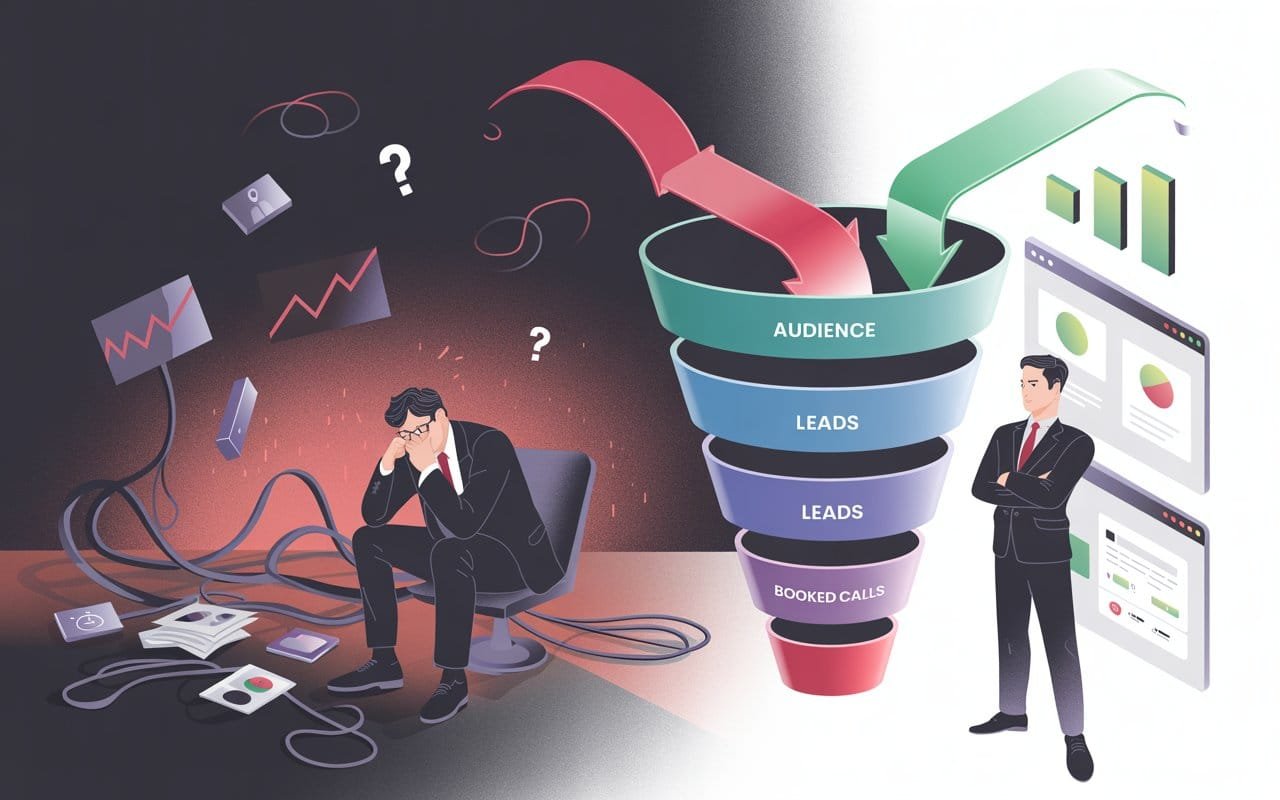
You do not have a lead problem. You have a system problem.
Most businesses live in feast or famine. One month is busy, the next is quiet, so you scramble. More cold outreach, more discounts, more random posts, hoping something hits. That is not a growth strategy. That is survival.
A digital growth blueprint changes that. Instead of guessing, you build a simple, repeatable system that takes strangers from “never heard of you” to “booked a call” every week. Consistent leads, predictable pipeline, less drama.
The Practical 7-Steps Blueprint for Consistent Lead Generation
Here is how to think about consistent leads step-by-step.
Step 1: Get the Foundations Right Before Chasing More Clicks
Before you pump money into ads or content, you need a website that can actually convert. Sending traffic to a weak page is the fastest way to burn a budget .
Your home and key service pages must answer three things in seconds.
- Who is this for
- What problem do you solve
- What is the next step
Make your offer obvious, your value concrete, and your call-to-action specific.
Examples.
- “Book a 15-minute strategy call.”
- “Get a free audit of your funnel.”
Avoid vague CTAs like “Learn more” or “Contact us”. They do not belong in a digital growth blueprint that is supposed to generate a real pipeline.
Step 2: Choose your Primary Lead Source Channels
You do not need to be everywhere. You need one or two channels that can reliably feed your funnel.
For most service and B2B businesses, that mix looks like.
- Search. SEO and or Google Ads so you show up when people are actively looking
- Social. One primary platform where your audience actually pays attention
- Retargeting. Simple ads that follow visitors who did not convert the first time
Start small, but commit. A blueprint is about consistency, not spikes.
Step 3: Create a Clear Offer for Cold Visitors
“Book a call” works for hot leads. Cold visitors usually need a step in between. That is where your lead magnet or entry offer comes in.
Think in terms of.
- Free audits or reviews
- Short checklists or playbooks
- Quick calculators or assessments
- Low-commitment intro calls with a defined outcome
The key: It must solve a specific problem your ideal customer feels strongly about. Not a generic “download our guide”.
Put this offer front and center on your site and landing pages. Make it the main CTA across your channels. Everything feeds into that one door.
Step 4: Build a Simple Follow-Up System
Most buyers do not convert on the first visit. If you rely entirely on “call us now,” you drop anyone who is not ready today.
You need a basic nurture flow, nothing crazy.
- A welcome email that delivers the promised resource and sets expectations
- A short sequence of 3 to 5 emails sharing quick wins, proof, and answers to common objections
- Occasional useful content and case stories that keep you on their radar
Every touchpoint should quietly point back to your main action. “When you are ready, hit reply or click here to get your custom plan.”
This is where consistent leads are born, not at the first click, but in the follow-up, most businesses skip.
Step 5: Align Content with Real Buying Questions
Content is not a word count game. It is a sales asset.
Use it to answer what real buyers are thinking.
- “How much does this really cost?”
- “How long will it take?”
- “What can go wrong?”
- “What will I actually get for my money?”
Write blogs, guides, and FAQ sections that tackle these directly. Then link them into your core pages and your follow-up emails.
This does two things.
- Helps SEO and paid campaigns land on pages that feel relevant
- Reduces friction later in the sales conversation because you answered most objections upfront
That is smart digital growth – content that actually moves deals, not just rankings.
Step 6. Track the Metrics that Matter
You cannot fix what you do not measure. Your digital growth blueprint needs a basic dashboard.
At a minimum, track.
- Traffic by channel
- Leads by channel
- Conversion rate on key pages
- Cost per lead for paid campaigns
- Close rate from each source
Then ask every month.
- Which channels are feeding the pipeline
- Which pages convert best and why
- Where are people dropping off in the journey
Stop guessing. Double down on what is working and cut what is not.
Step 7: Improve in Cycles, not Random Bursts
Consistency beats intensity.
Instead of “full website redesign” every few years and random campaign blasts, work in cycles.
- Month 1: Fix the most important page and test one new offer
- Month 2: Improve follow-up and tweak targeting
- Month 3: Create one strong piece of content around a proven topic
Every quarter, review the full funnel from first click to closed deal. Adjust the blueprint based on real data. This is how you move from zero to consistent leads without burning out your team.
Conclusion
You do not need more hacks or random tactics. You need a clear, honest digital growth blueprint that turns strangers into leads and leads into customers on repeat.
Revolute X Digital specialises in building these systems, from high-converting websites and offer design to SEO, paid traffic, and follow-up flows that actually close. If you are ready to stop guessing and start getting a predictable pipeline, our team can map and execute a custom blueprint for your business. Two or three focused lines of strategy can change how you grow. Reach out to us, and we will help you turn that into a real plan.
FAQS
What is the 70/20/10 rule in digital marketing?
The 70/20/10 rule suggests:
- 70% of your efforts go into proven strategies that already work
- 20% into optimizing and improving those strategies
- 10% into testing new ideas
In a lead generation system, this helps you focus on consistent results instead of chasing random tactics.
How to generate leads organically?
To generate leads organically:
- Optimize your website for conversions
- Use SEO to rank for high-intent keywords
- Create content that answers real buyer questions
- Offer lead magnets like audits or checklists
- Build trust through case studies and testimonials
Organic leads take time but deliver the highest long-term ROI.
Can ChatGPT do lead generation?
ChatGPT can support lead generation by:
- Creating content and landing page copy
- Writing email sequences and follow-ups
- Generating ideas for offers and funnels
- Answering customer questions
However, it doesn’t replace strategy or traffic sources—it supports the system, not the system itself.
Is lead generation illegal?
No, lead generation is legal when done ethically. It becomes a problem only when businesses:
- Use spam tactics
- Violate privacy laws
- Mislead users
Following proper data and consent guidelines keeps your lead generation safe and compliant.
How to get 100 leads a day?
Getting 100 leads per day requires:
- High traffic from SEO or paid ads
- Strong conversion rates on landing pages
- Clear offers and lead magnets
- Automated follow-up systems
It’s not about one trick—it’s about scaling a proven system.
What apps pay $100 a day legit?
Apps don’t directly relate to business lead generation. However, for businesses, tools like:
- CRM platforms (HubSpot, Zoho)
- Ad platforms (Google Ads, Meta Ads)
- Automation tools
help generate revenue by managing leads effectively.
Are paid leads worth it?
Paid leads are worth it when:
- Cost per lead is lower than customer value
- Targeting is precise
- Landing pages convert well
Paid traffic works best when combined with strong organic strategies.
What is a digital growth blueprint?
A digital growth blueprint is a structured system that combines:
- Website optimization
- Traffic generation (SEO, ads)
- Lead capture
- Follow-up automation
It turns random marketing into a predictable lead generation engine.
Why am I getting traffic but no leads?
This usually happens when:
- Your offer isn’t clear
- Your website doesn’t build trust
- CTAs are weak or confusing
- There’s no follow-up system
Traffic without conversion is a system issue, not a traffic issue.
What is the fastest way to generate leads online?
The fastest way is:
- Running targeted PPC ads
- Sending traffic to optimized landing pages
- Offering a clear, valuable lead magnet
This creates immediate visibility while long-term channels like SEO build in the background.
How do you turn website visitors into leads?
To convert visitors into leads:
- Use clear CTAs (calls to action)
- Offer something valuable upfront
- Reduce friction in forms
- Add trust signals (reviews, proof)
- Follow up quickly
Conversion optimization is what turns traffic into revenue.

Jason
We are an Affordable Digital Marketing Agency in Shawnee with budget-friendly solutions to amplify your brand. Elevate your business without compromising quality or cost.