
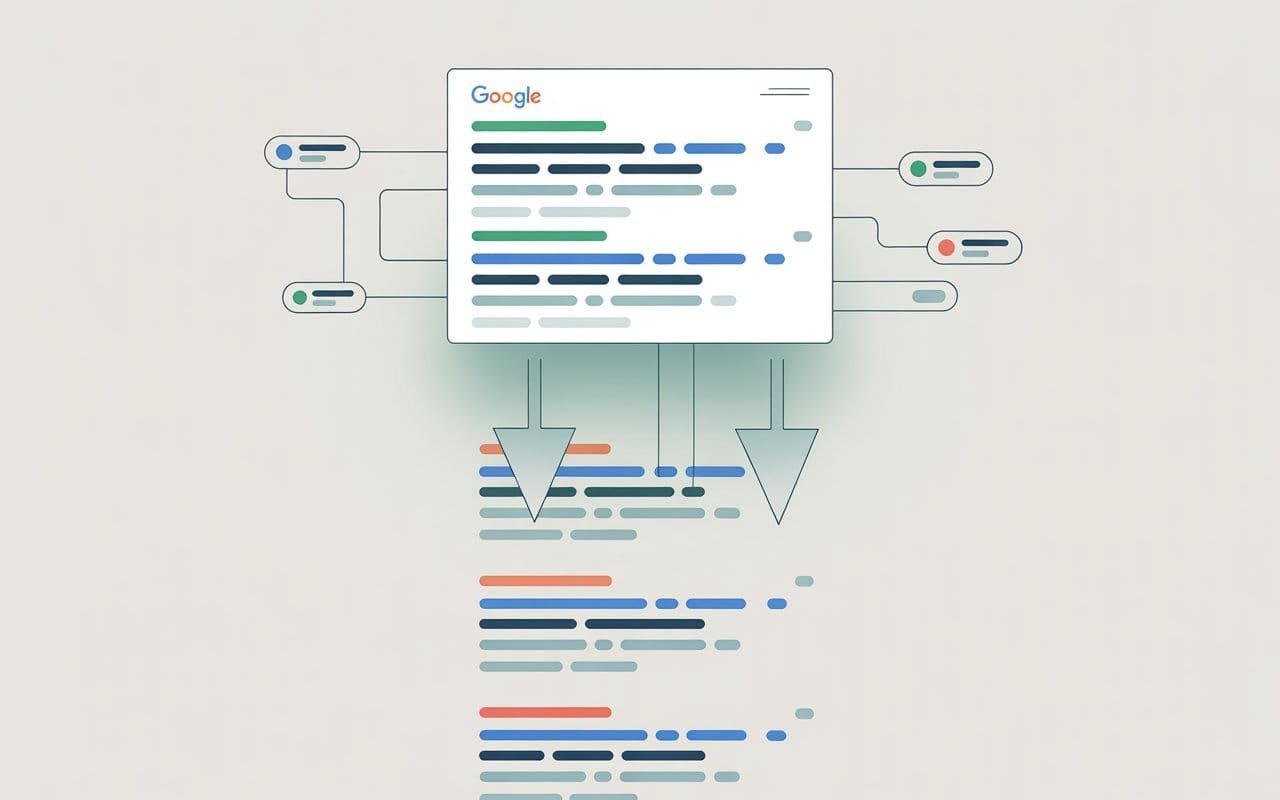
Google’s AI Overviews have changed the rules of visibility. Search results are no longer just a list of links. For many queries, Google now shows an AI-generated snapshot at the top, with supporting links underneath. Google describes AI Overviews as a faster way to get key information, with links for people who want to dig deeper.
For SEOs and executives, the impact is not theoretical. It is measurable. Less clicking, more “answers on the SERP,” and a new fight for being cited inside the AI response rather than simply ranking number one.
AI Overviews Are Reshaping SEO
Here is what changes in 2026 and what you should do about it.
- AI Overviews Reduce Clicks, even when Rankings Stay the Same.
The most immediate impact is a click loss on informational queries. Multiple industry studies show significant CTR drops when AI Overviews appear.
- Ahrefs reported that AI Overviews reduced click-through rate for the top ranking position by about 34.5% in their analysis.
- Seer Interactive reported that organic CTR for informational queries with AI Overviews fell sharply compared to earlier periods, and that paid CTR also declined on those queries.
- BrightEdge data showed deeper impressions while click-through rates fell, aligning with the idea that users are seeing results but not visiting sites as often.
This is the key point. Your rankings can look “fine,” but traffic can still drop because the user got enough from the overview. This is exactly why ranking #1 on Google no longer guarantees traffic.
- Visibility is Splitting into Two Layers – Being Cited Matters
In classic SEO, position was the headline. In AI Overviews, there is a new layer above rankings, the citations that appear inside or beneath the AI answer.
Google’s site owner guidance on AI features clearly states that content can be used in AI experiences and that links may be shown to support the information presented.
So, winning now has two tracks:
- Ranking well in organic results
- Earning inclusion as a cited source in the AI Overview
That second track is not guaranteed even if you rank first, because AI Overviews can pull links based on related or reformulated queries, not only the exact query you are tracking.
- “Zero click” Pressure Increases – Reporting must Evolve.
When Google answers more directly on the results page, some searches end without a site visit. This trend has been discussed for years, but AI Overviews accelerate it, especially for quick informational questions. BrightEdge’s reporting highlights a pattern of impressions rising while CTRs drop, creating a perception gap for leadership teams who only watch traffic.
What executives should demand in 2026 is better SEO reporting, such as:
- Share of SERP features and AI Overview presence for priority topics
- Brand mentions and citations in AI experiences
- Assisted conversions influenced by organic visibility
- Search Console impressions and query coverage, not only sessions
If your dashboard only shows sessions, you will think SEO is “failing” when, in reality, your visibility may be expanding while clicks compress. You can learn more about how Google is shifting this dynamic in our post on what drives clicks in AI Overviews.
- Content Strategy Shifts from Keywords to Answers and Proof
AI Overviews reward content that is easy to extract, verify, and summarize. That pushes SEO strategy toward clarity and evidence.
What works better now:
- Direct answers near the top of the page
- Short definitions, then a deeper explanation
- Clear headings that match real questions
- Unique data, original examples, and real experience
What works worse now:
- Long introductions that delay the answer
- Generic, copycat content that says nothing new
- Pages built only to “rank,” not to help
In an AI-first SERP, sameness is punished. If your page does not add something distinct, it is less likely to be cited and less likely to earn the click that remains.
- Technical SEO is still Foundational, but the Goal is Changing.
None of this replaces technical SEO. It changes why you do it.
Your goal is not only “crawl and index.” Your goal is “crawl, understand, and confidently reuse.” Google’s guidance on AI features emphasizes considering how your content might appear in these experiences.
Practical technical priorities:
- Clean site architecture and internal linking so that important pages are easy to discover
- Structured data where relevant, so entities, products, FAQs, and organizations are unambiguous
- Fast, stable pages so users who do click actually convert
- Strong canonicalization so Google understands the primary version of each page
What to do now? A Practical AI Overviews SEO Playbook
Audit where AI Overviews Show up in your Niche
Track your top queries and note which ones trigger AI Overviews. Use this to prioritize which pages need “answer-ready” upgrades.
Rewrite Intros to Answer Faster
Give the core answer within the first screen, then expand. This helps both users and systems that summarize content.
Build Citation Worthy Sections
Add definitions, step-by-step methods, checklists, and short FAQs. These are easy to quote and easy to trust.
Add Proof, not Fluff
Include screenshots, case results, original examples, or first-hand process explanations. This is what differentiates you from the average page that AI can replicate.
Strengthen Author and Brand Signals
Make it obvious who wrote the content, why they are qualified, and how to contact the business. This supports trust, which matters more in AI summaries.
Optimize for Multiple Intents, not One Keyword
Because AI Overviews can connect to related queries, build topical coverage that answers adjacent questions and objections. To go deeper, read our guide on Mastering Visual Search Optimization & Contextual SEO, which is key for multimodal AI results.
Measure Outcomes Beyond Clicks
Track conversions, leads, and pipeline impact from organic traffic, not just traffic. In a compressed CTR world, quality beats raw volume.
Final Thoughts!
AI Overviews are not the end of SEO. They are the end of lazy SEO. The brands that win in 2026 will be the ones that produce genuinely useful content, structure it for clarity, and build authority strong enough to be cited inside AI answers. Revolute X Digital helps businesses adapt to this shift with practical SEO strategies, content frameworks built for AI-driven SERPs, and performance reporting that executives can actually trust. If you want to protect rankings, earn citations, and turn shrinking clicks into higher quality leads, Revolute X Digital can build that roadmap with you. Contact us today!

Jason
We are an Affordable Digital Marketing Agency in Shawnee with budget-friendly solutions to amplify your brand. Elevate your business without compromising quality or cost.