
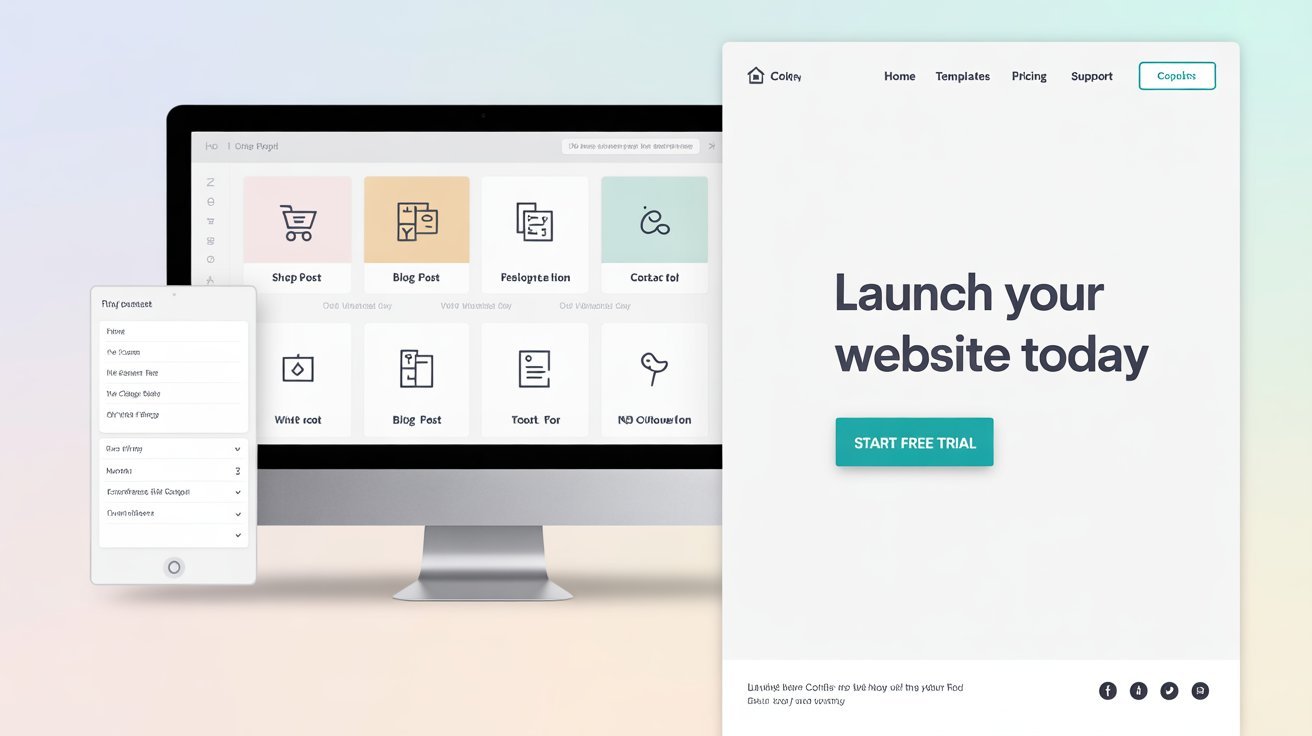
A business without a website struggles to compete in today’s digital-first world. Customers expect to find information quickly—whether they want to check opening hours, browse services, or compare options before making a decision. In 2026, not having a website is like closing the doors of a physical store during business hours.
The challenge used to be cost and technical skills. Hiring developers was expensive, and building from scratch required coding knowledge. That barrier is gone. Anyone can launch a professional-looking site in days, sometimes even hours, with a no code website builder .
Instead of coding, technical background, and waiting, all you have to do is just use a drag and drop website builder with templates, effortless editing, and one-click publishing.
Why No Code Tools Changed the Game?
No code web design tools have transformed how businesses create and manage their online presence. The reasons are clear:
- Speed: Launching a site doesn’t take weeks. Restaurants can post their menus online the same day. Local service providers can build booking forms in hours.
- Affordability: Subscriptions are more affordable as compared to hiring a web developer. Even state-of-the-art platforms cost a fraction of what a custom-coded site would.
- Control: A beginner-friendly website builder puts site management in the hands of business owners and their crews. Updating photos, editing text, or adding new service pages becomes common, not a technical task.
- Scalability: Many no code tools now include SEO, eCommerce, and marketing integrations. This suggests firms can evolve without revamping their websites from scratch.
Agencies like RevoluteX Digital often guide businesses in choosing the right platform. Picking wisely from the start prevents wasted time, poor design, or switching platforms later.
2026 Leading No Code Website Builders
Wix – Fast and Flexible
Wix remains a go-to option for small businesses. Its drag and drop website builder makes it easy to get a site online quickly. With built-in SEO features, app integrations, and a wide range of templates, it’s excellent for local businesses—cafes, gyms, salons, or professional services—that ought to demonstrate credibility quickly.
Freedom can be both a strength and a flaw. Too many design options can result in cluttered sites if not carefully handled.
Squarespace – Sleek and Professional
Squarespace focuses on design quality. Templates are modern, polished, and easy to adapt for industries like photography, fashion, consulting, and boutique retail. Businesses that rely heavily on visuals often prefer Squarespace because their sites look professional right from the start.
Its structure is more limited compared to Wix, but that’s exactly what many businesses appreciate. Fewer options reduce the chance of design errors. For branding-focused companies that want a sharp, consistent look, Squarespace delivers.
Webflow – Creative Freedom Without Code
Webflow has become the platform of choice for businesses that want advanced design but without the complexity of coding. Animations, interactions, and unique layouts are possible, giving brands a highly customized look.
It has a learning curve. Business owners new to web design may feel overwhelmed at first. However, when paired with professional guidance, Webflow shines. It’s especially popular with startups, creative agencies, and companies that want their websites to feel “custom” without paying developer prices. RevoluteX Digital often uses Webflow when clients need something distinct that stands out from cookie-cutter templates.
WordPress.com – Content and Growth
WordPress continues to dominate for content-driven websites. Its block editor now functions much like other no code web design tools, making it accessible to non-technical users. Add thousands of plugins, and WordPress evolves into one of the most scalable platforms available.
WordPress is the go-to option for blogging, resource libraries, membership sites, and service-based businesses. It needs more time to learn, but it also offers unmatched flexibility. For firms preparing long-term growth—SEO-driven content marketing, endless expansion, or big service catalogs—WordPress stays the strongest option. RevoluteX Digital often recommends it for businesses serious about building content authority.
Shopify – Built for Selling
Shopify owns the eCommerce space. It’s designed to help businesses sell products online with ease. Product listings, payment processing, shipping, inventory management, and marketing tools are all built in.
It’s not free, and subscription costs increase with advanced features. But for companies whose main goal is selling online, Shopify is worth every dollar. The platform ensures customers enjoy smooth, secure transactions—something that builds trust instantly. For businesses launching online stores, RevoluteX Digital often recommends Shopify as the foundation.
Carrd – Simple and Affordable
Carrd is lightweight and quick. It is ideal for single-page sites like portfolios, landing pages, and resumes. Its simplicity is its edge: it’s inexpensive, easy to use, and one of the best free no code website builder options for individuals or micro-businesses testing an idea.
It won’t support complex needs like eCommerce or large blogs. But for a small project, Carrd delivers exactly what’s needed without unnecessary features.
Free vs Paid Builders
Free plans allow businesses to test the waters. They’re useful for practice but come with big drawbacks—ads, limited features, and branded subdomains. Customers notice these limitations, and credibility takes a hit.
Paid plans unlock full functionality. Custom domains, SEO tools, and integrations make the difference between “amateur” and “professional.” For businesses serious about growth, upgrading is essential. RevoluteX Digital often advises clients to invest early in a paid plan—it saves the effort of rebuilding later.
Matching Platforms to Business Needs
Every builder serves a different type of business.
- Wix: versatile, quick to set up.
- Squarespace: visually polished, less flexible.
- Webflow: highly customizable, better with guidance.
- WordPress.com: content-driven, scalable.
- Shopify: complete eCommerce solution.
- Carrd: simple, one-page projects.
Choosing depends on goals. A bakery may launch quickly with Wix. A fashion boutique could rely on Squarespace visuals. A SaaS startup might choose Webflow for uniqueness. An online retailer should almost always consider Shopify.
Businesses often struggle to make this choice alone. Working with professionals like RevoluteX Digital ensures the right decision is made the first time—avoiding costly migrations later.
Why does RevoluteX Digital Recommends No Code Website Builder?
No code isn’t just a trend. It’s the standard for small to medium businesses in 2026. These platforms cut development costs, speed up timelines, and give business owners control.
But tools alone don’t guarantee success. Design, SEO, and conversion strategy matter just as much as the platform. That’s where RevoluteX Digital helps. By combining no code builders with proven marketing strategies, businesses not only launch websites but also turn them into growth engines.
Final Word
Websites are no longer optional, and building one no longer needs coding or big budgets. With today’s no code web design tools, companies can get online quickly, affordably, and professionally.
The challenge isn’t whether to use no code—it’s which platform best matches long-term goals. Choosing wisely ensures the site supports growth, not just visibility.
And when that decision feels overwhelming, RevoluteX Digital is here to guide the process. From selecting the right builder to designing, optimizing, and scaling, our team helps businesses launch websites that do more than exist. We perform, convert, and grow alongside your goals. Contact us today!
FAQs
What is a no code website builder?
A no code website builder is a platform that allows users to create websites without writing code. These tools use drag-and-drop editors, pre-built templates, and visual design controls so anyone can launch a website quickly without technical skills.
Can I build a professional website without coding?
Yes. Modern no code website builders allow businesses to create professional websites using templates, visual editors, and built-in features like SEO tools, forms, and eCommerce integrations. Many businesses launch fully functional websites in hours without hiring developers.
What is the best no code website builder for small businesses?
The best platform depends on business needs:
- Wix – best for flexibility and quick setup
- Squarespace – best for design and visual brands
- Webflow – best for custom layouts and advanced design
- WordPress.com – best for content marketing and blogging
- Shopify – best for eCommerce stores
- Carrd – best for simple landing pages or portfolios
Are free website builders good for businesses?
Free website builders are useful for testing ideas, but they usually include ads, limited features, and branded subdomains. Businesses that want credibility, SEO capabilities, and full functionality should upgrade to a paid plan.
How long does it take to build a website with a no code builder?
Most businesses can launch a basic website within a few hours or days using a no code website builder. More complex sites with custom design, SEO setup, and integrations may take several days to a few weeks.
Are no code websites good for SEO?
Yes. Many no code website builders include built-in SEO tools such as:
- Meta title and description editing
- Sitemap generation
- Mobile optimization
- Fast page loading
- Structured page hierarchy
Platforms like WordPress, Webflow, Wix, and Shopify all support strong SEO strategies.
Is Shopify a no code website builder?
Yes. Shopify is a no code website builder designed specifically for eCommerce. It allows businesses to create online stores, manage inventory, process payments, and handle shipping without coding.
What are the benefits of no code web design tools?
No code tools offer several advantages:
- Faster website launches
- Lower development costs
- Easy updates without developers
- Built-in marketing and SEO features
- Scalable integrations for growth
These benefits make them ideal for small and medium-sized businesses.
What should businesses consider when choosing a website builder?
When choosing a no code website builder, businesses should consider:
- Type of website (business, blog, eCommerce)
- SEO capabilities
- design flexibility
- scalability for growth
- integrations and marketing tools
- ease of use
Selecting the right platform early helps avoid costly migrations later.

Jason
We are an Affordable Digital Marketing Agency in Shawnee with budget-friendly solutions to amplify your brand. Elevate your business without compromising quality or cost.