
Choosing the right Google Business Profile (GBP) categories is one of the most important—and often overlooked—parts of local SEO.
Your business category tells Google what your company does. It influences the searches you appear for, the features available in your profile, and how Google compares your business to competitors.
Many businesses select a primary category during setup and never think about it again. That mistake can limit your visibility in Google Search and Google Maps.
If you want to improve your local rankings, start by making sure your business categories accurately represent your services.
What Are Google Business Profile Categories?
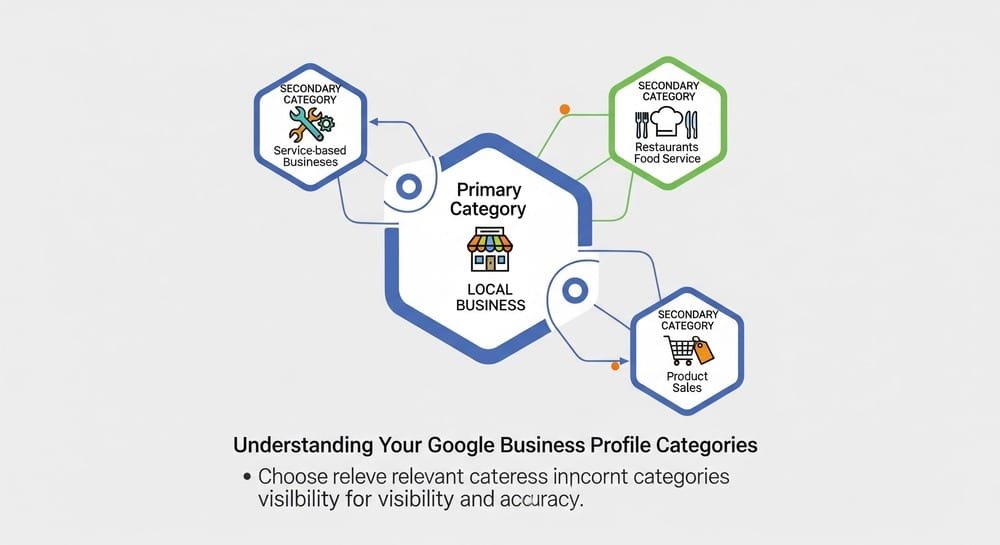
Google Business Profile categories are predefined labels that describe your business. Every profile requires one primary category, and most businesses can also choose additional secondary categories.
For example:
| Business | Primary Category | Secondary Categories |
| Roofing Company | Roofing Contractor | Gutter Cleaning Service, Siding Contractor |
| Dental Clinic | Dentist | Cosmetic Dentist, Emergency Dental Service |
| Auto Repair Shop | Auto Repair Shop | Brake Shop, Oil Change Service |
| HVAC Company | HVAC Contractor | Air Conditioning Repair Service, Heating Contractor |
These categories help Google understand when your business is relevant to a customer’s search.
Why Categories Matter for Local SEO
Categories are one of Google’s strongest local ranking signals. They influence:
- Google Maps visibility
- Local Pack rankings
- AI-generated business recommendations
- Available profile features
- Services you can add
- Customer discovery searches
Choosing the wrong category can prevent your business from appearing for searches that match your actual services.
Your Primary Category Is the Most Important
Your primary category should represent your core business—not your most profitable service.
For example:
A roofing company that also installs gutters should choose:
- Primary Category: Roofing Contractor
- (Instead of Primary Category: Gutter Cleaning Service)
Google expects your primary category to describe your main business activity. Choosing the wrong one can confuse Google’s algorithms and reduce your visibility.
Use Secondary Categories Strategically
Secondary categories allow you to expand your visibility without changing your primary focus.
For example, a landscaping company may also offer:
- Irrigation Installation
- Landscape Lighting
- Tree Service
- Snow Removal
- Lawn Care
Adding relevant secondary categories helps Google understand the full scope of your business while making you eligible for more local searches. Only select categories that accurately reflect services you genuinely provide.
Avoid Category Spam
Some businesses try to gain an advantage by selecting every category that sounds remotely related. This is a mistake.
Adding irrelevant categories can:
- Confuse Google’s understanding of your business
- Generate unqualified leads
- Reduce topical relevance
- Hurt customer trust
Your categories should match your actual expertise—not your wishlist.

Research Your Top Competitors
One of the easiest ways to improve your category strategy is by reviewing successful competitors. Look at businesses that consistently rank in the Google Map Pack.
Ask yourself:
- Which primary category are they using?
- Which secondary categories appear most often?
- Are there legitimate categories your business is missing?
Competitor research can reveal opportunities without copying their entire strategy. (If you notice another local business outperforming you, you might want to audit their profile to understand why your competitor gets Google calls and you don’t).
Align Categories with Your Website
Your website should support your Google Business Profile.
If your profile includes “Commercial Roofing,” your website should also contain information about commercial roofing services. Likewise, avoid selecting categories for services that aren’t mentioned anywhere on your site.
Consistency helps Google verify your expertise across multiple sources.
Review Categories Regularly
Google occasionally introduces new business categories or updates existing ones. Review your categories every few months to ensure you’re using the most accurate options available. (Pro Tip: It is now easier than ever to monitor how these profile updates impact your traffic since Google Analytics now includes Google Business Profile data.)
You should also update categories whenever your business expands into new services. For example:
- Residential → Commercial
- General Plumbing → Water Filtration
- Basic Landscaping → Outdoor Living Design
As your business evolves, your Google Business Profile should evolve too.
Common Category Mistakes
Avoid these common errors:
- Choosing a broad category instead of a specific one.
- Selecting categories for services you don’t provide.
- Ignoring secondary categories.
- Failing to update categories as your business grows.
- Copying competitors without considering your own business model.
A thoughtful category strategy is much more effective than simply adding as many categories as possible.
Final Thoughts
Google Business Profile categories play a much bigger role than many business owners realize. They help Google understand your business, determine when your profile should appear in local search results, and connect you with customers searching for exactly what you offer.
By choosing the right primary category, adding relevant secondary categories, and keeping your profile aligned with your website, you create a stronger foundation for long-term local SEO success.
At Revolute X Digital, we help businesses optimize every aspect of their digital presence—from category selection and service optimization to technical local SEO and content strategy. With AI Search (SGE) changing the way customers find local services, we ensure you can compete more effectively in today’s evolving digital landscape.

Jason
We are an Affordable Digital Marketing Agency in Shawnee with budget-friendly solutions to amplify your brand. Elevate your business without compromising quality or cost.